Church and Convent of São Francisco — History, features and the beauty of the Baroque style in Salvador
The Church and Convent of São Francisco, begun in the 17th century and completed in the 18th, are one of the finest examples of Portuguese Baroque architecture in Brazil and the most opulent religious building in Salvador. Combining architecture, gilded woodcarvings, paintings and tiles, they attract visitors and scholars from all over the world.

Videos about the Church and Convent of St Francis

Igreja de São Francisco - Caverna de Ouro08:59
Igreja e Convento de São Francisco em Salvador09:07
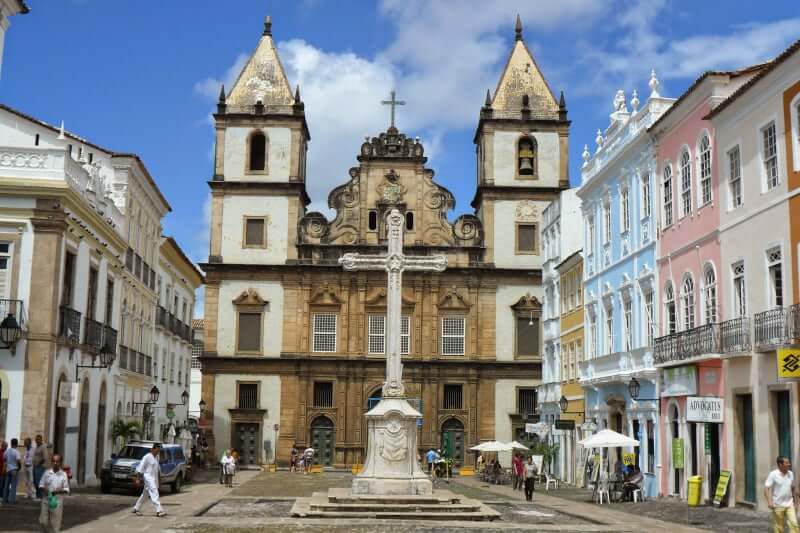
Igreja e Convento de São Francisco - Igreja de Ouro09:10
Origins and chronology
- 1587: arrival of the first Franciscans in Salvador; probable foundation of the first convent.
- 1624: damage caused by the Dutch invasion and subsequent reconstruction.
- 1686: design and start of construction, coordinated by Friar Vicente das Chagas.
- 1708: the foundation stone of the new church was laid; the building was completed in 1723; the decoration work continued.
- 1733–1737: ceiling paintings by Friar Jerônimo da Graça.
- 1737: tiles commissioned from Bartolomeu Antunes de Jesus in Lisbon.
- 1749: completion of the cloister.
- 1752: the convent was completed.
- 1782: completion of the tiling and finishing touches to the entrance hall.
- 20th century: periodic restoration work.
Architectural and decorative features
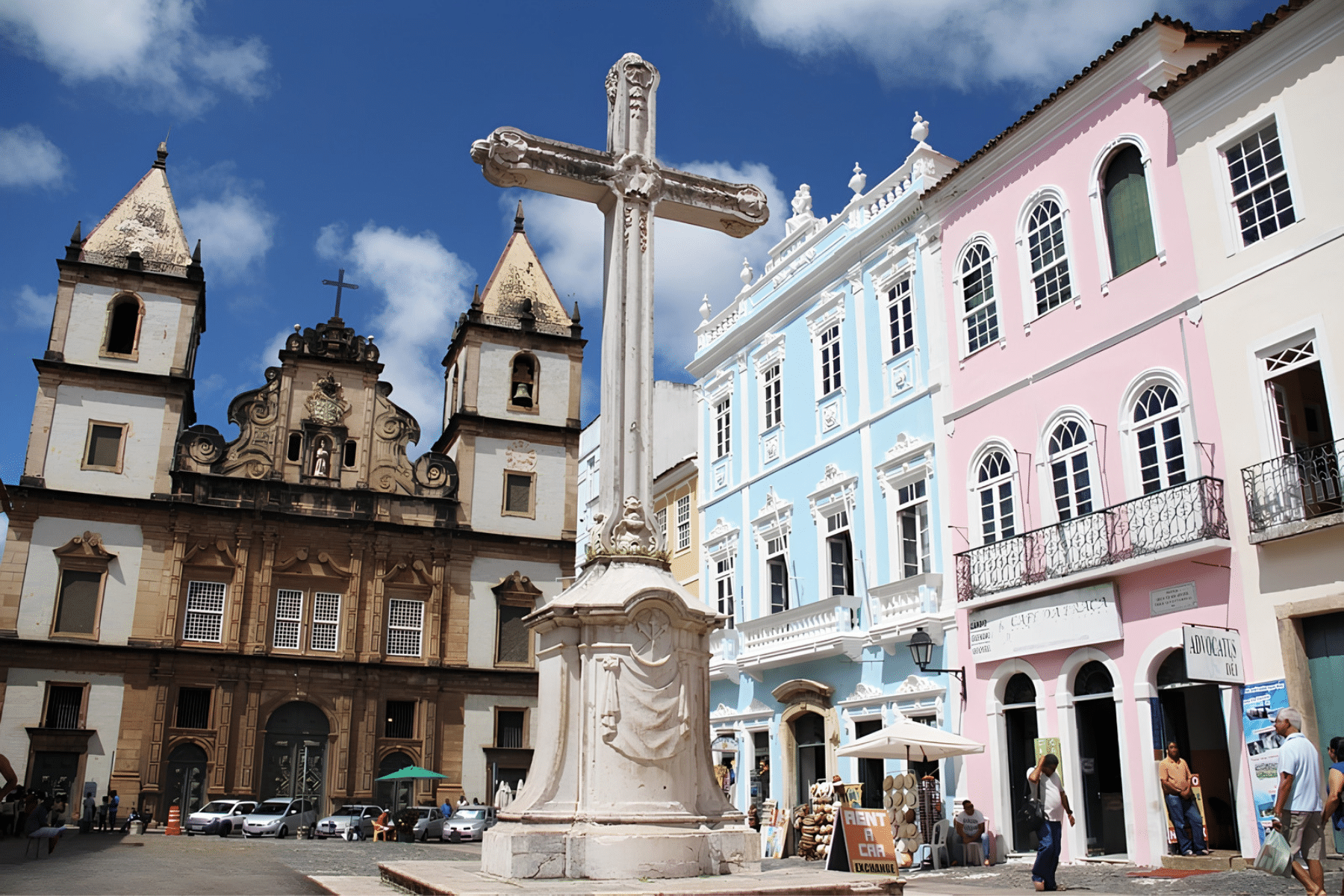
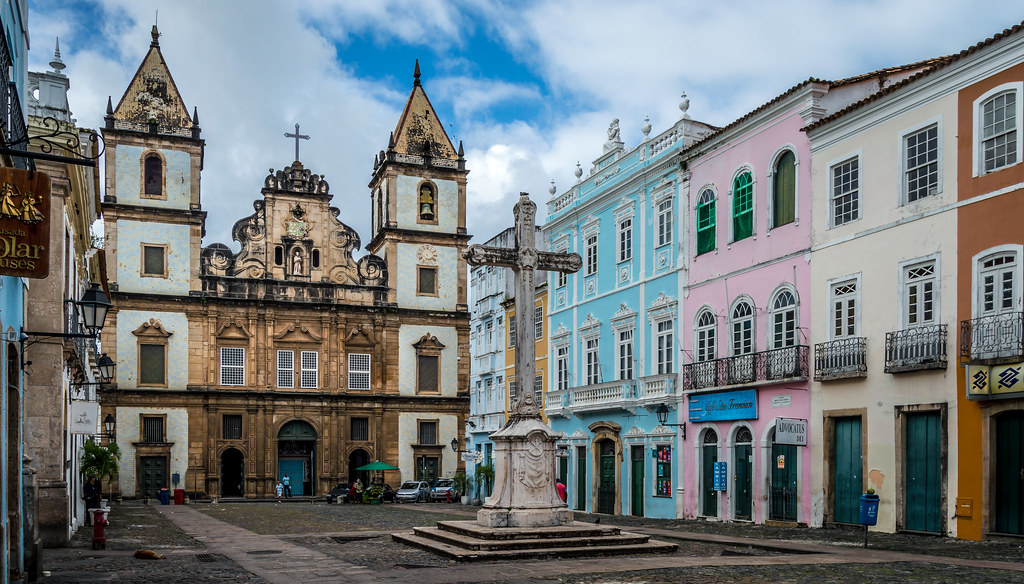
The layout is unusual for a Franciscan church in the North-East, featuring three naves. The stone façade, facing a square with a cross, shows Mannerist influences: two simple side towers and a more ornate central section at the pediment.
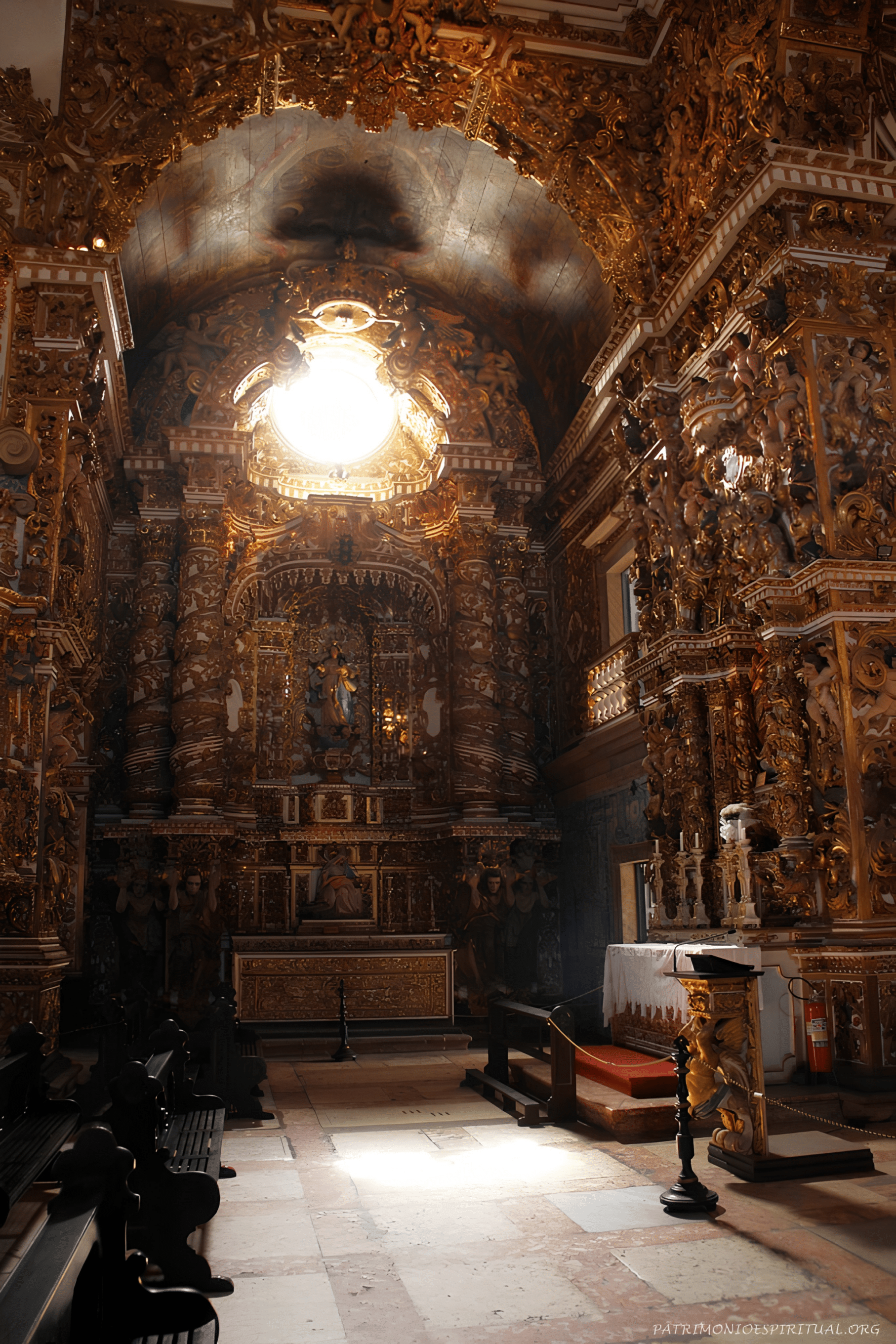
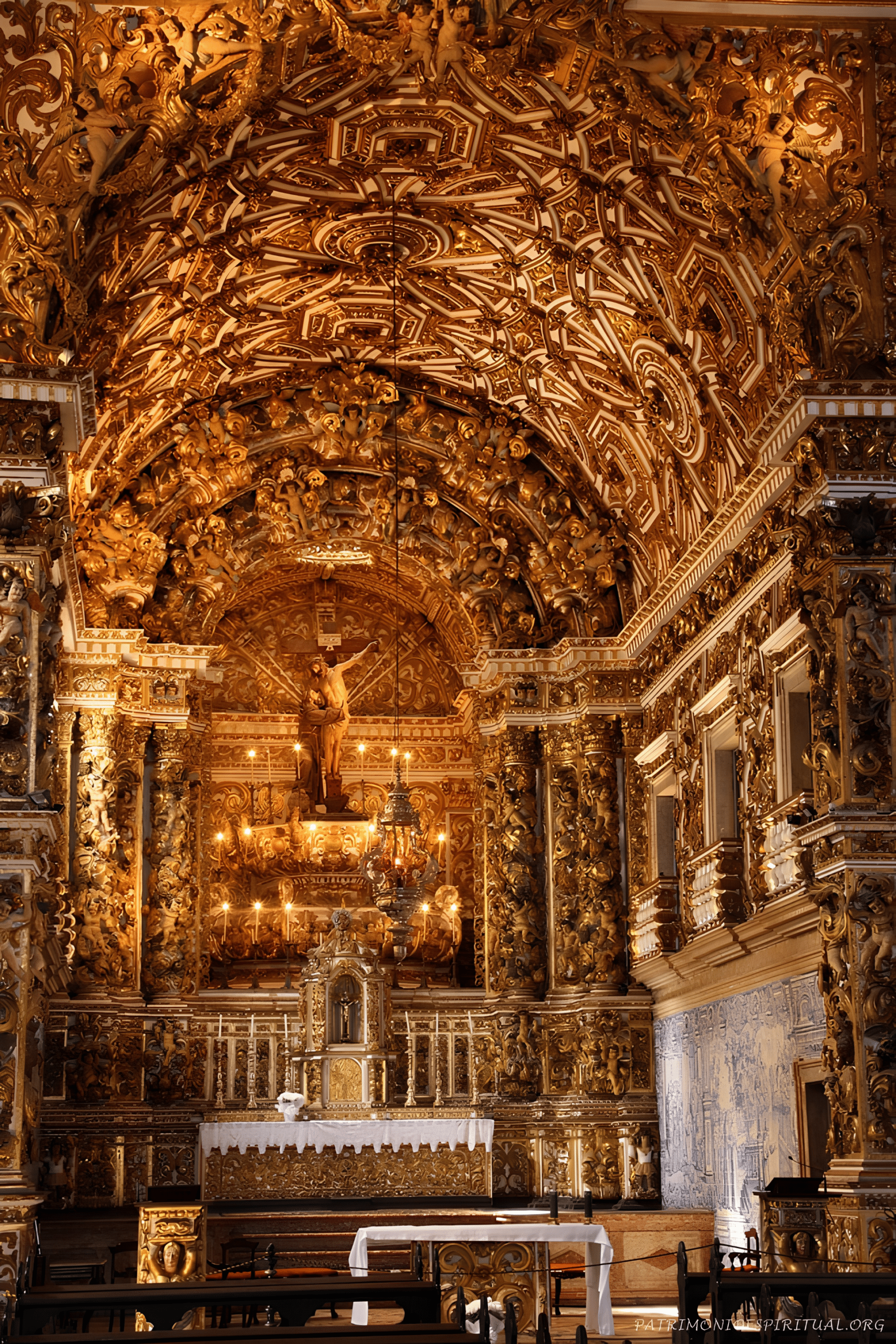
The interior is adorned with exuberant carvings and gilding on the walls, columns, ceiling and chapels — rosettes, friezes, volutes, angels and birds — and features outstanding gilded woodcarvings. The ceiling features paintings by Friar Jerônimo da Graça; the side entrance hall features an illusionist painting attributed to José Joaquim da Rocha.
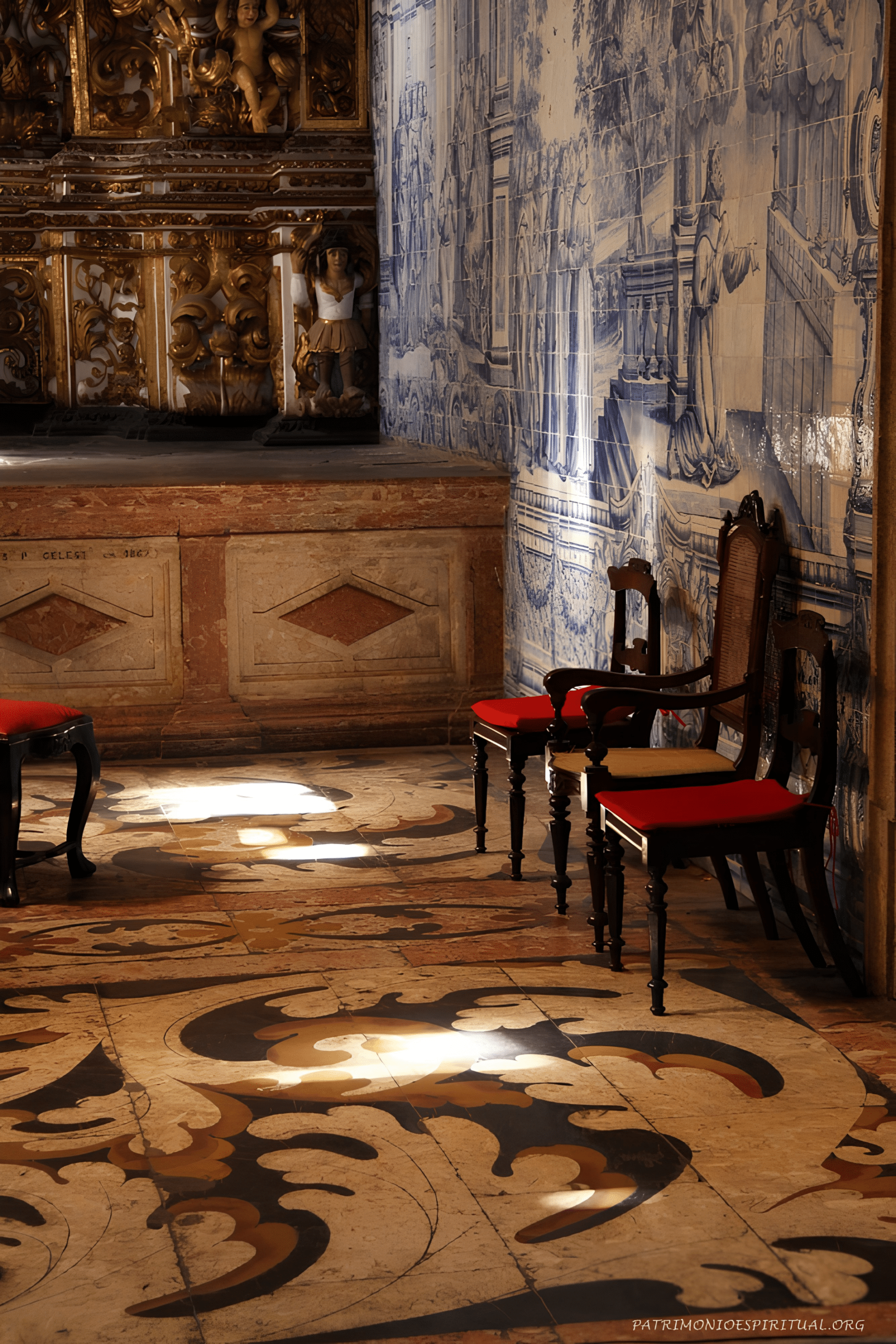
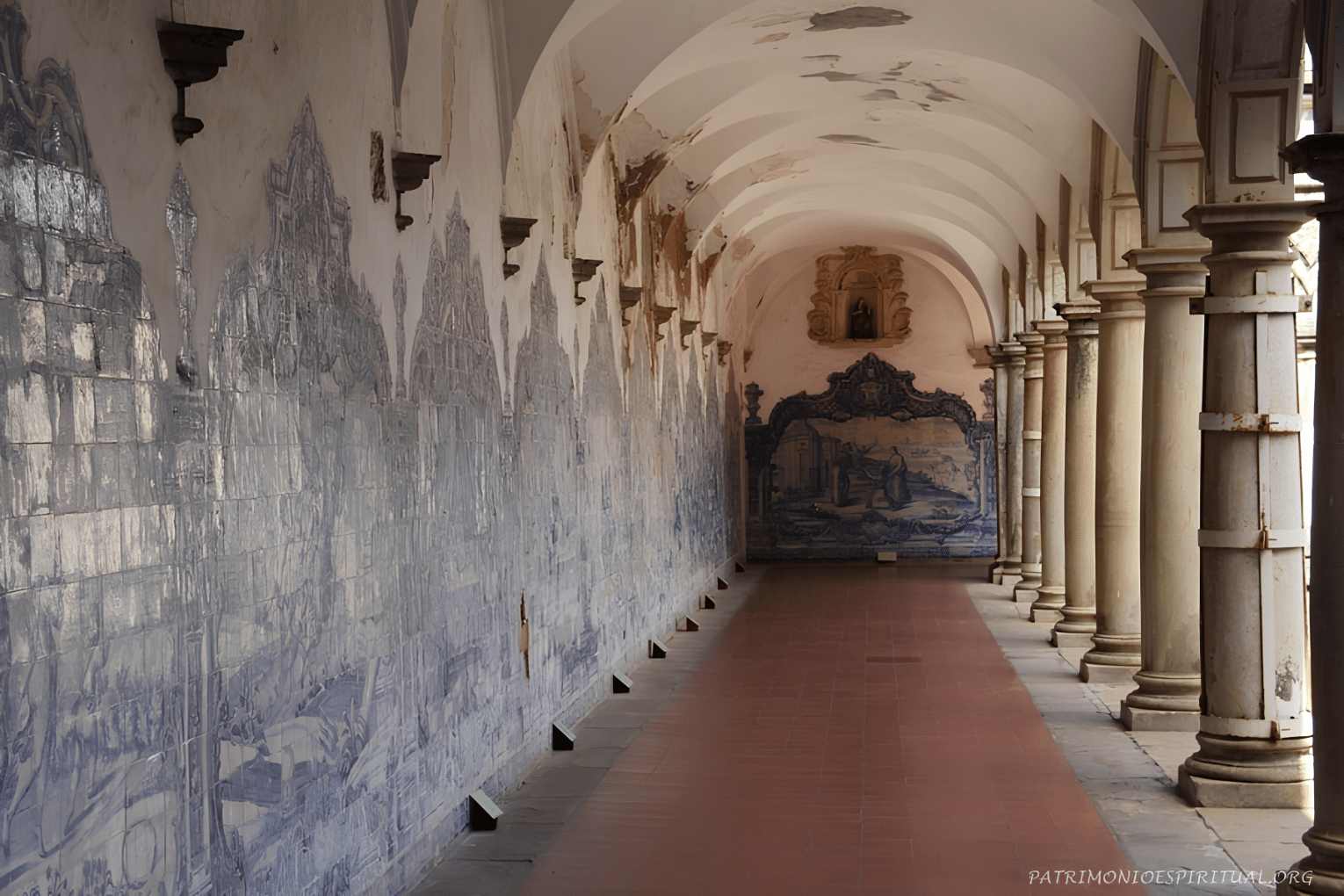
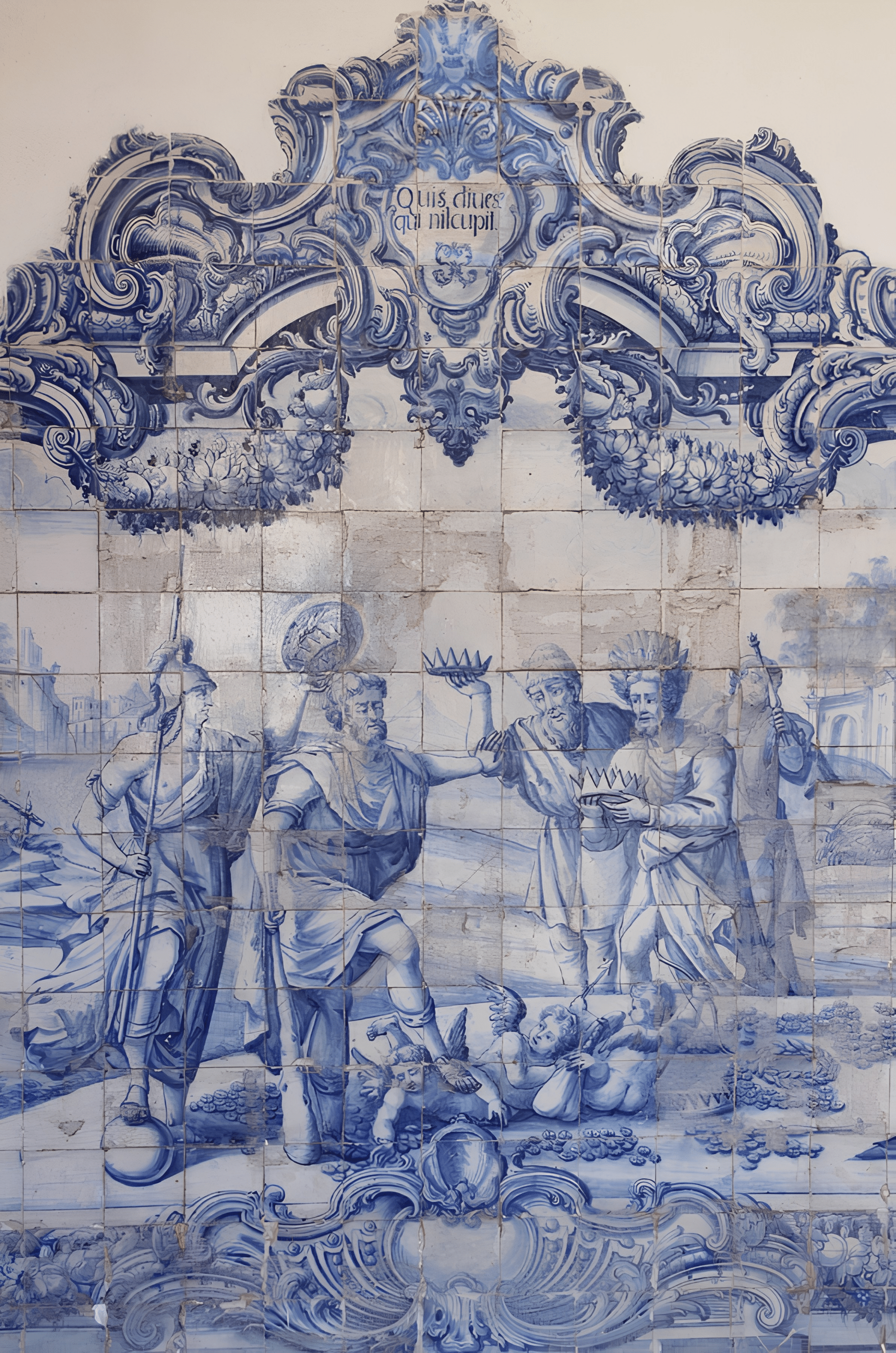
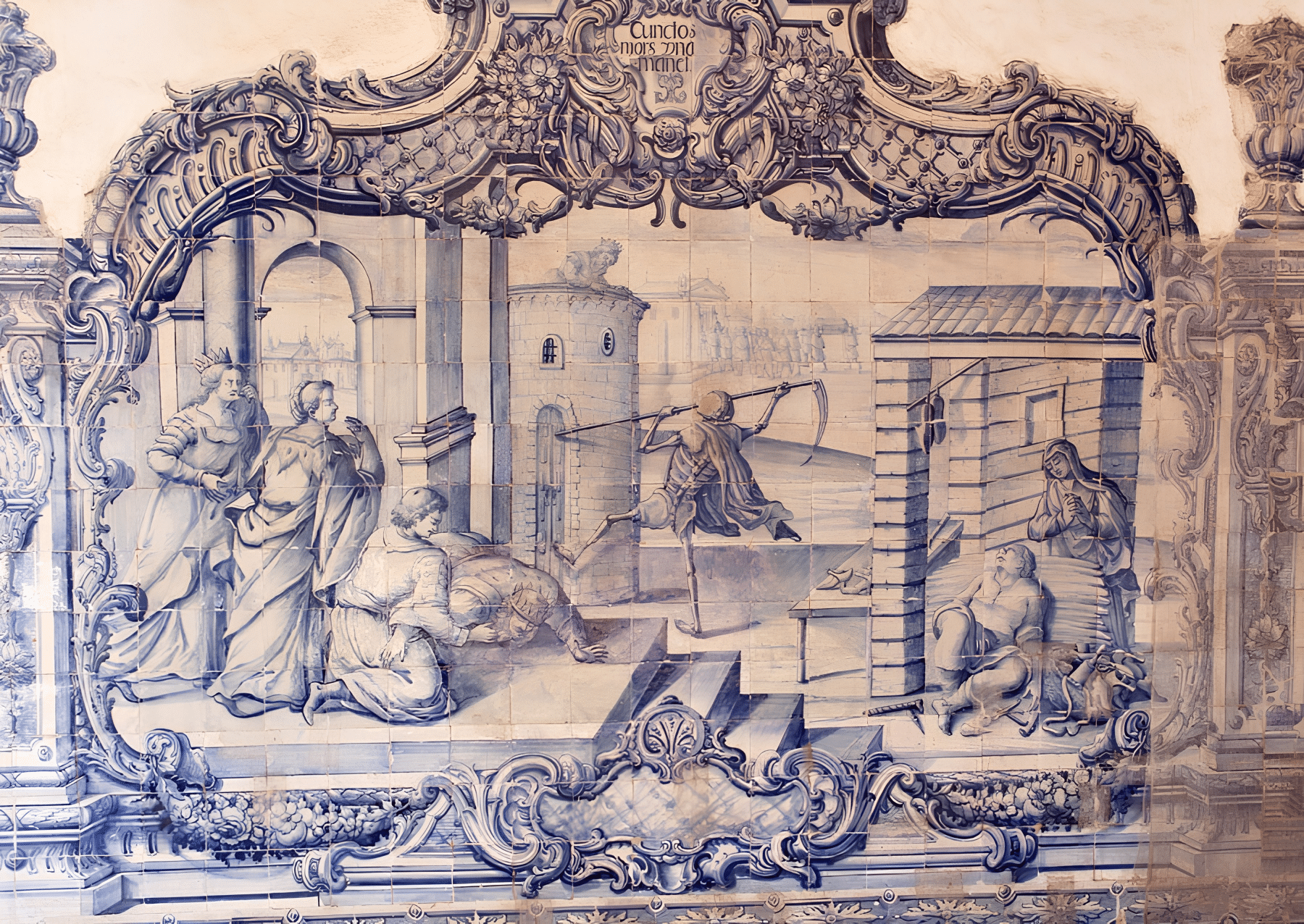
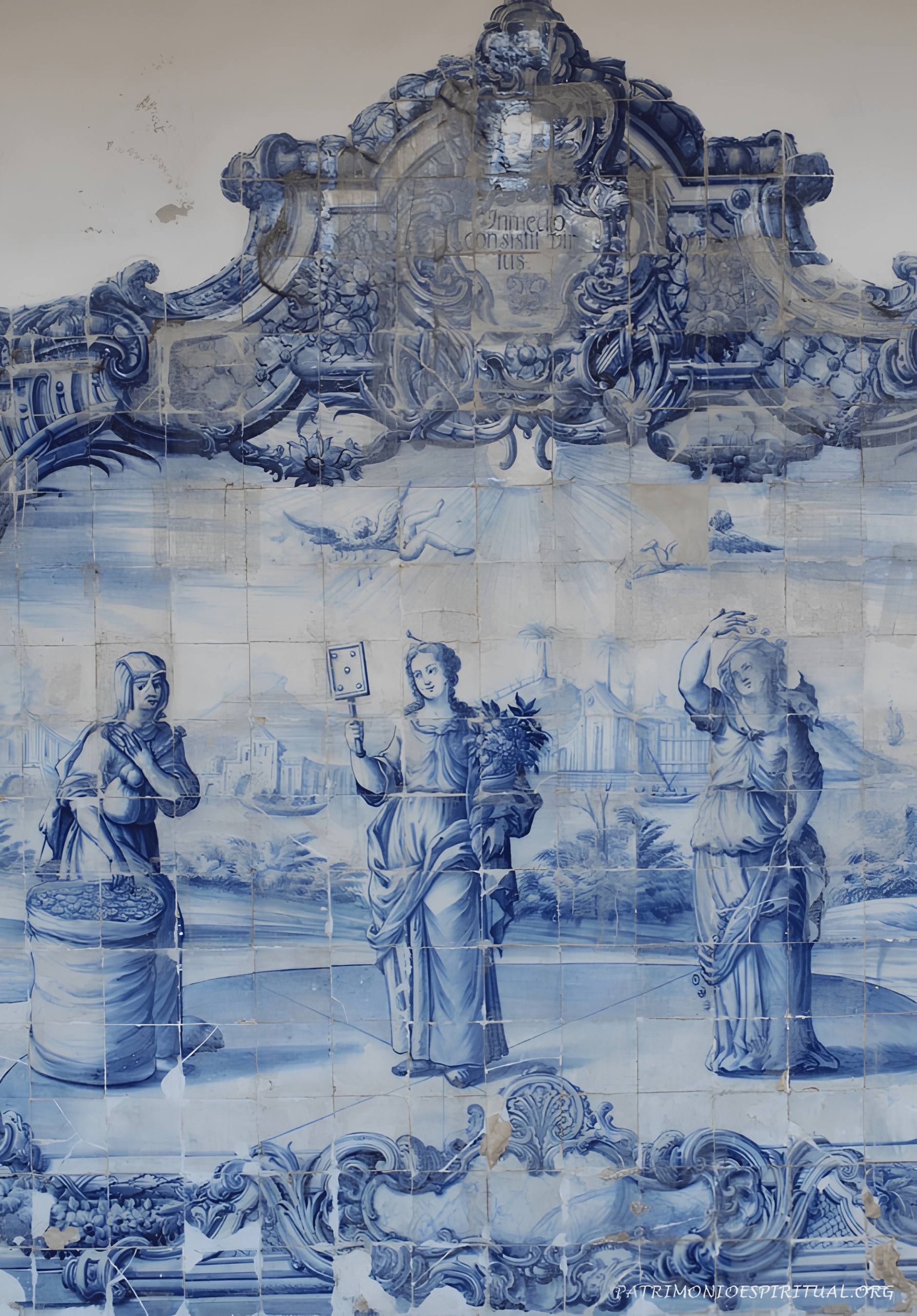
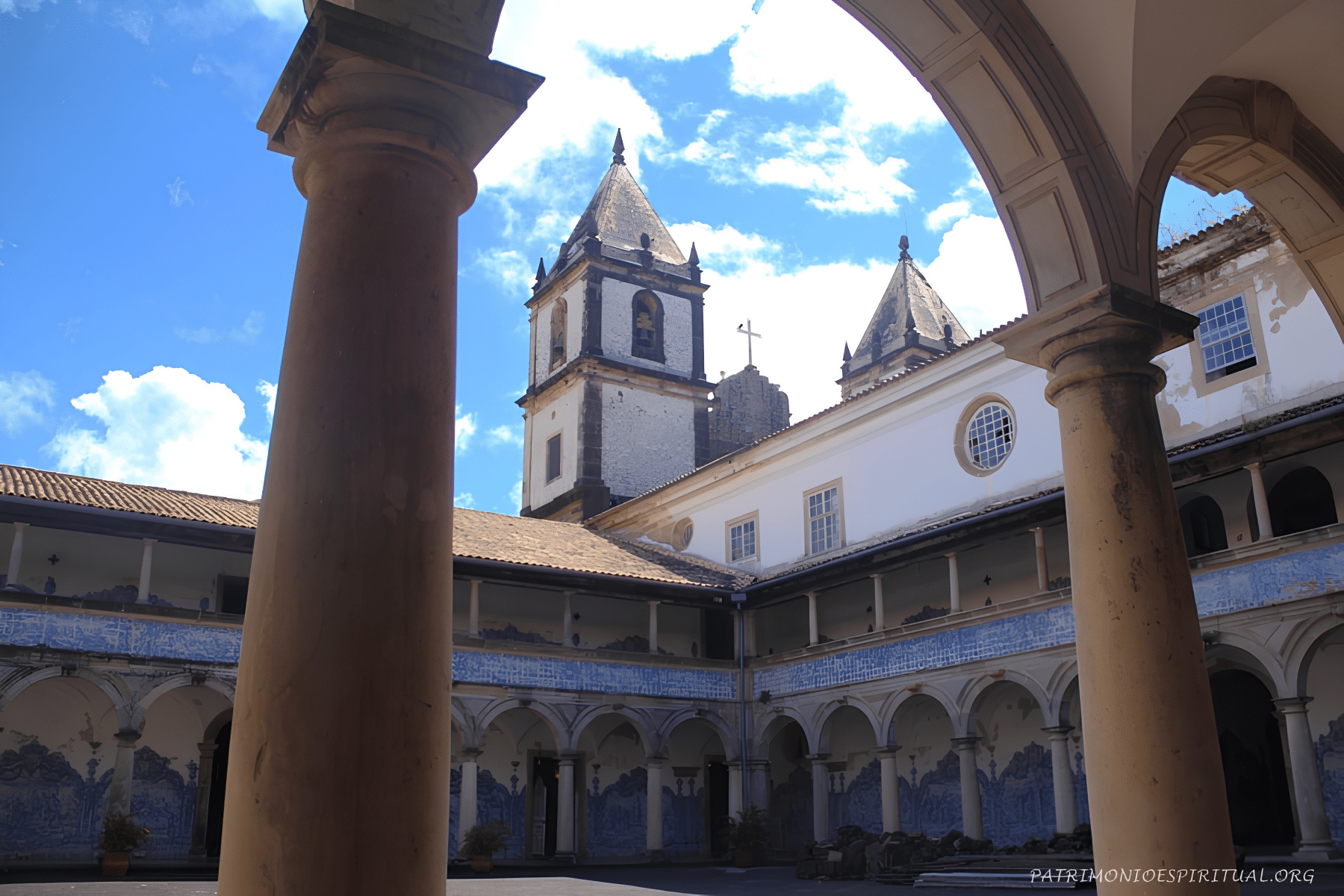
The 18th-century Portuguese tiles depict moralising scenes and episodes from the life of St Francis. The floor of the chancel is made of polychrome marble (Portugal, 1738). The square cloister contains the largest collection of Portuguese tiles in Brazil.
The collection includes rosewood balustrades by Frei Luís de Jesus and side altars dedicated to the Immaculate Conception, Saint Anthony, Saint Benedict, Saint Peter of Alcántara and Saint Joseph.
Photo gallery of the Church and Convent of São Francisco
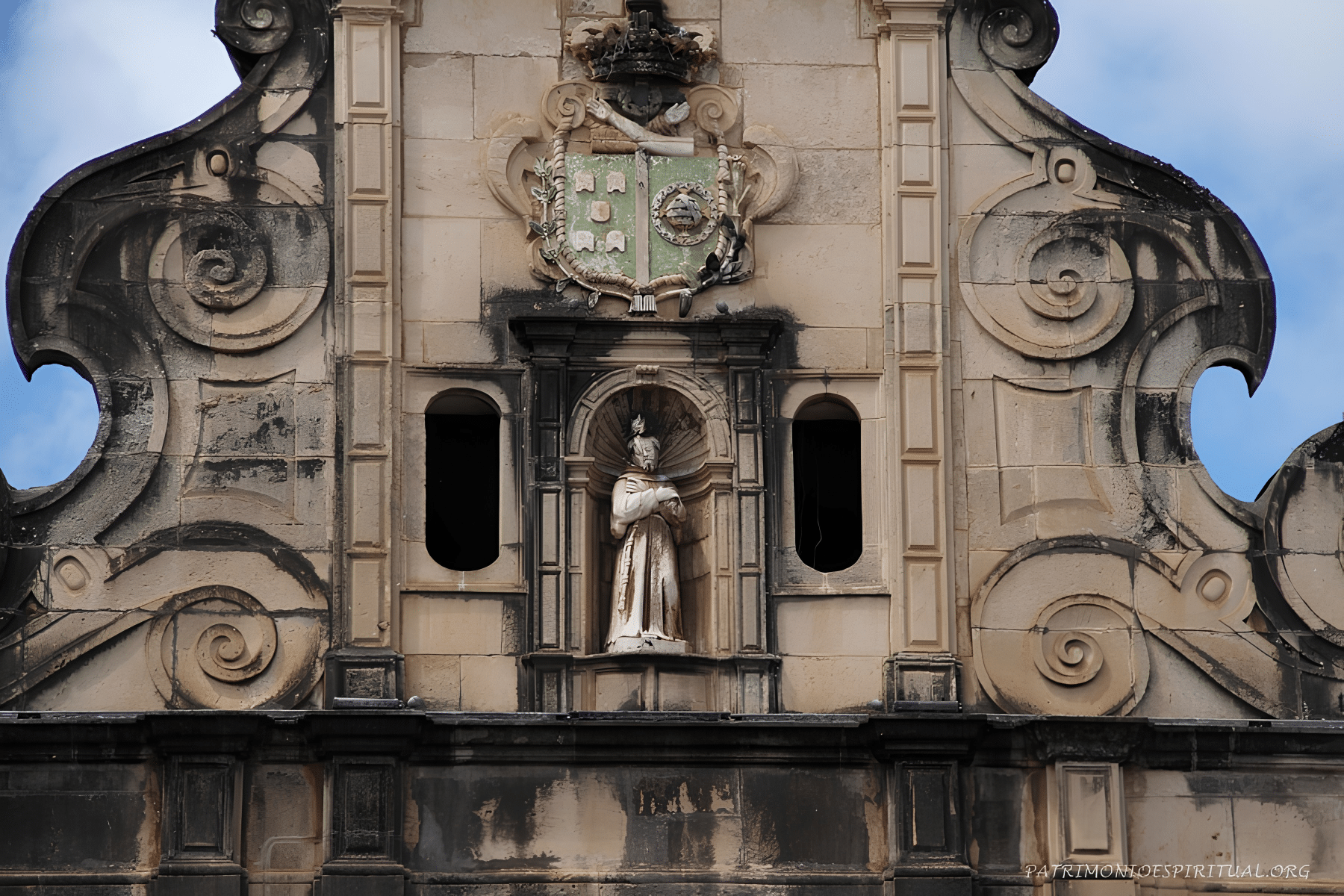
Below: the framed paintings on the ceiling depict scenes from the life of Christ and the Virgin Mary, as well as figures from the Old Testament who foreshadowed them.
The transept arch bears the same coat of arms as the Franciscan Order, featuring the coat of arms of Portugal.
On the two side altars, one can see, on the left, an image of the Immaculate Conception (a devotion particularly promoted by the Franciscans) and, on the right, one of Saint Anthony of Lisbon (or of Padua), who was also a disciple of Saint Francis.
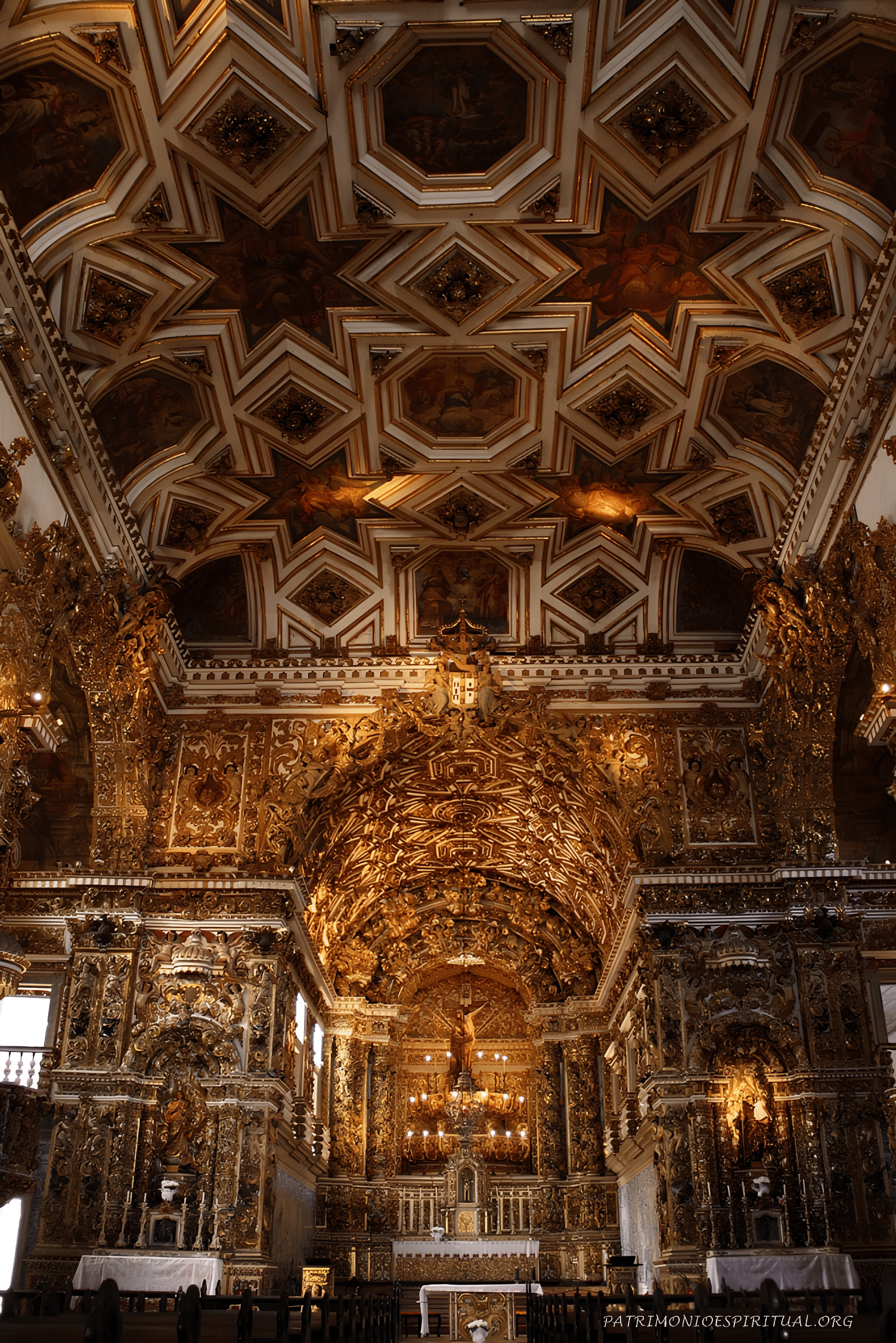
Below is an overview of the church.
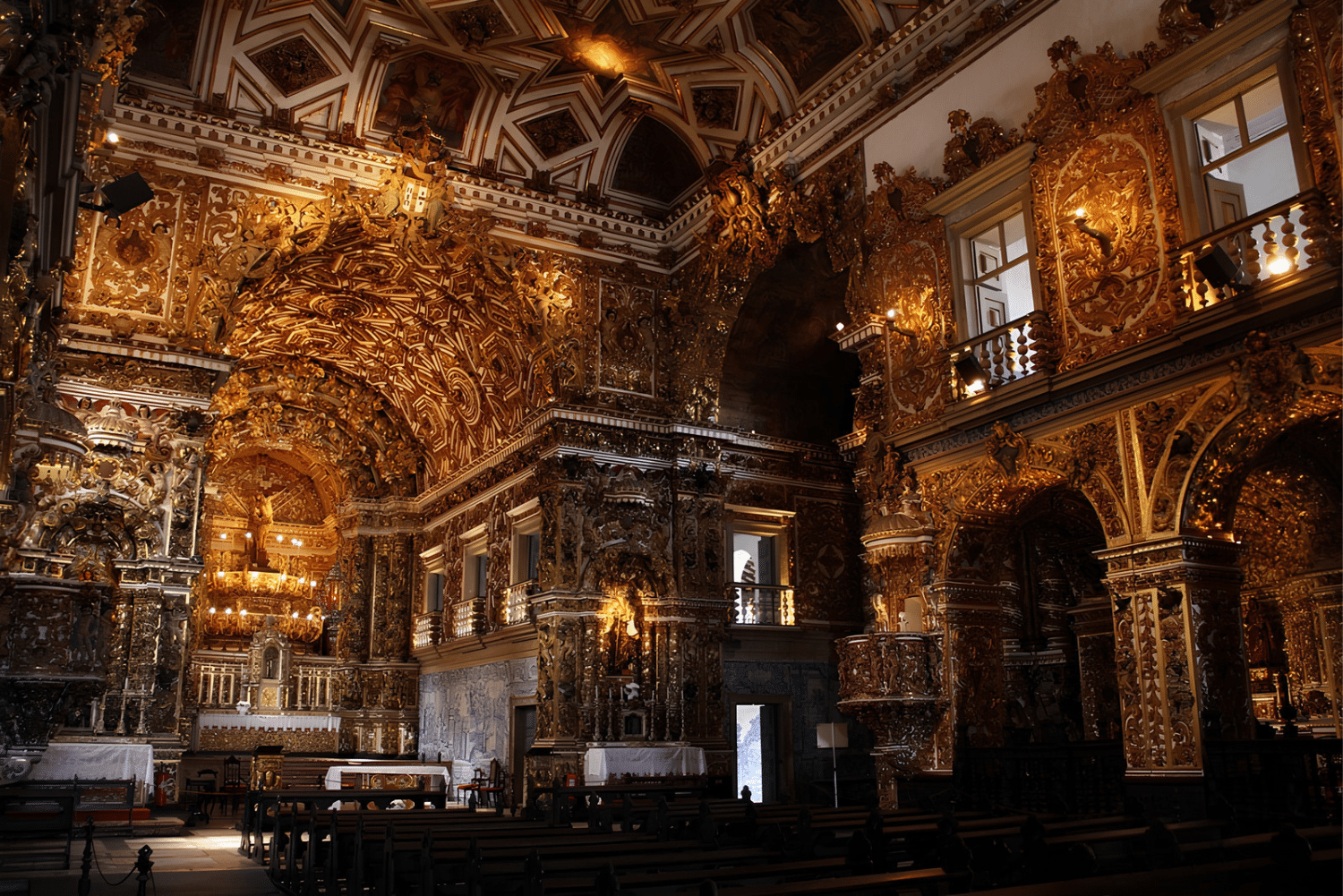
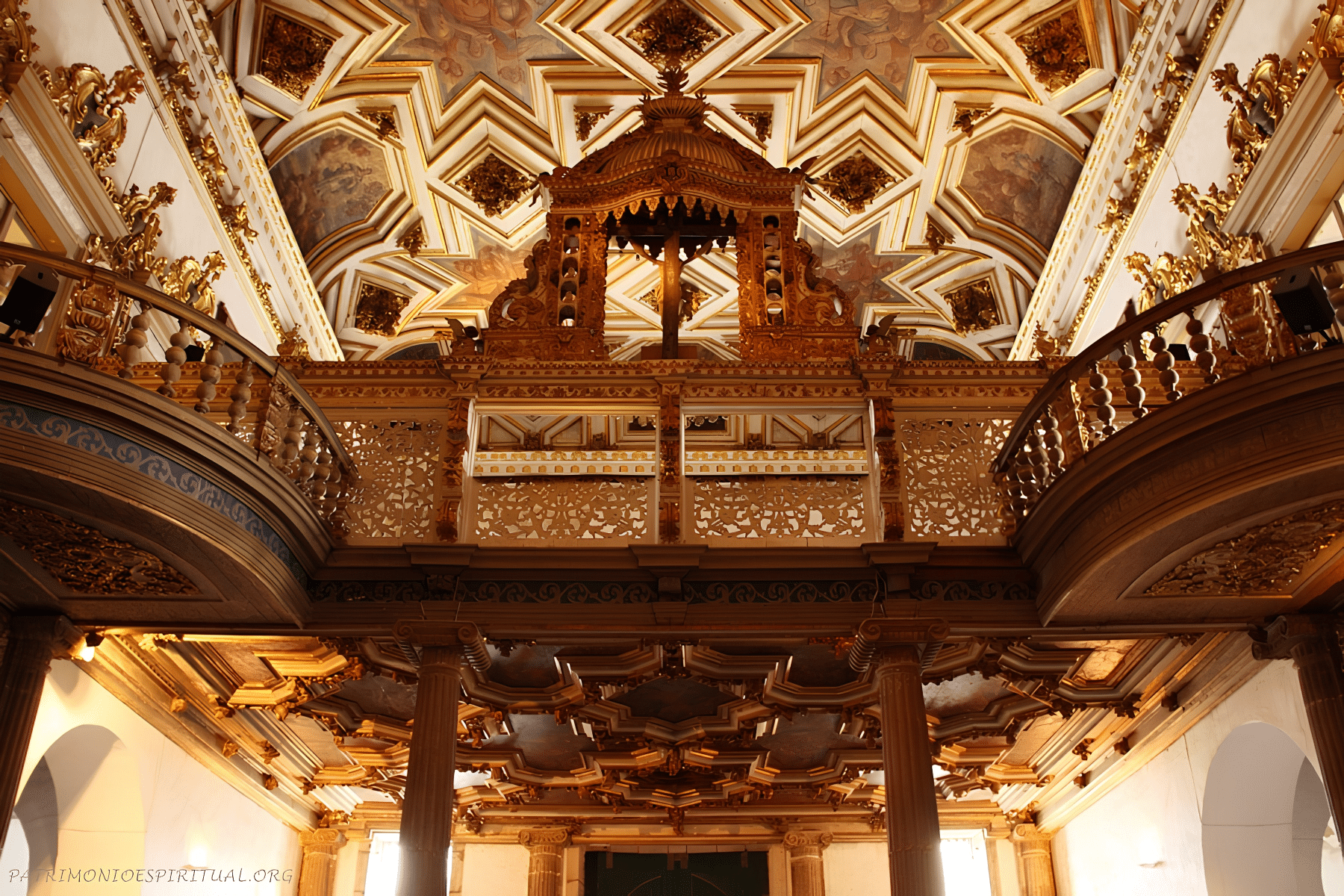
The side chapels are dedicated, on one side, to Saint Anne, Saint Lucy and Saint Efigénia, and on the other, Saint Benedict, Saint Peter of Alcántara and Saint Joseph. The balustrades in jacaranda wood were crafted by Friar Luís de Jesus, a Franciscan lay brother.
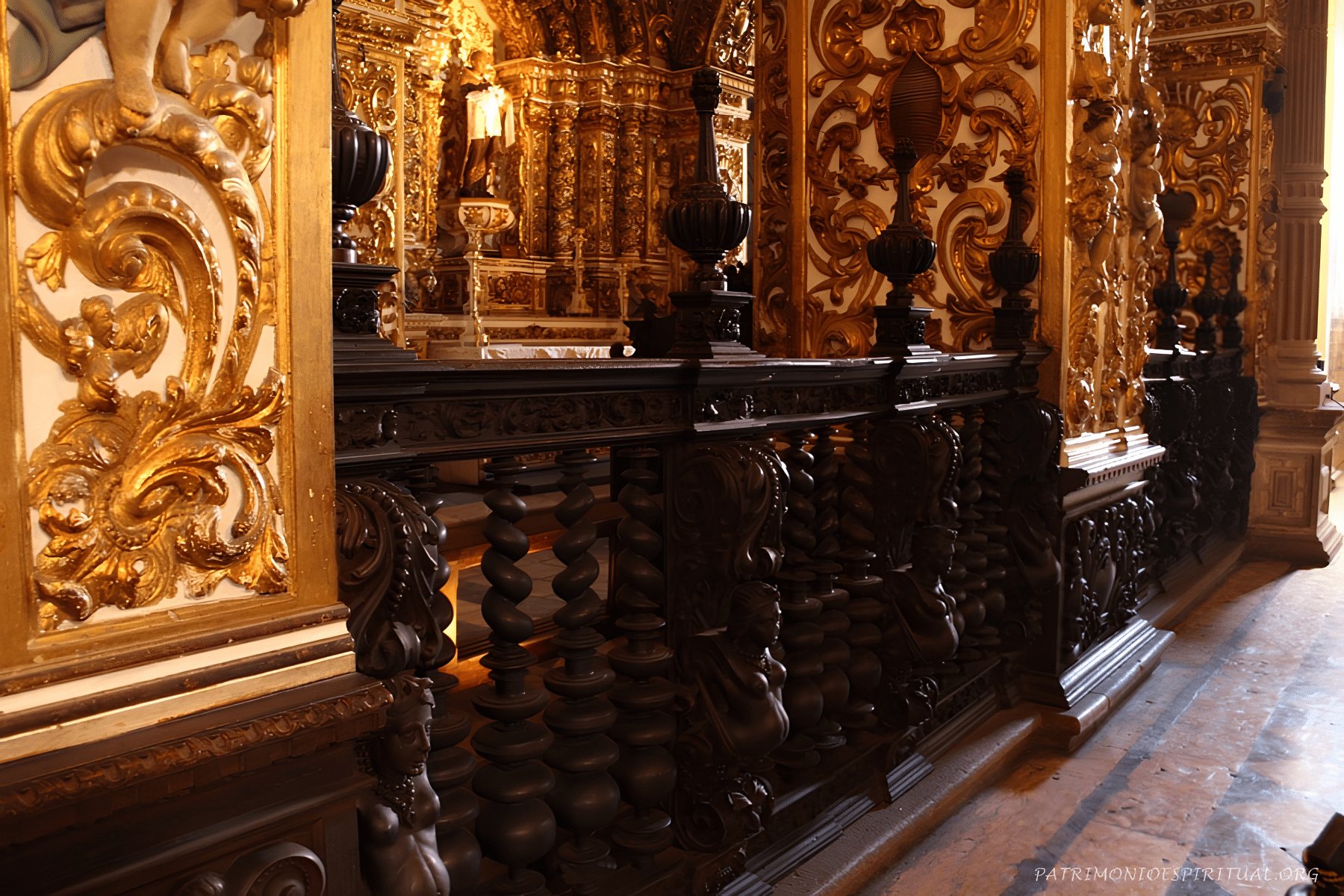
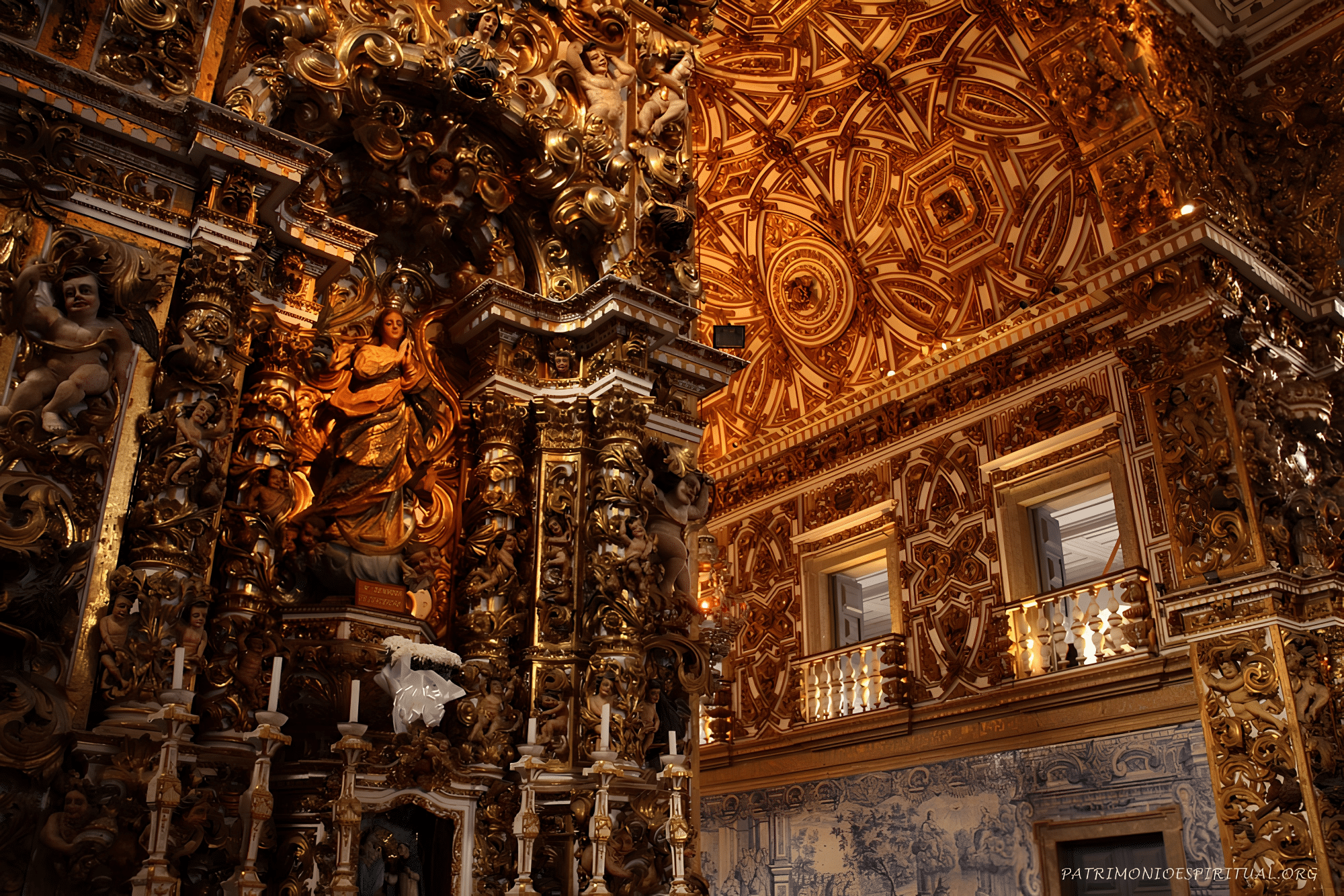
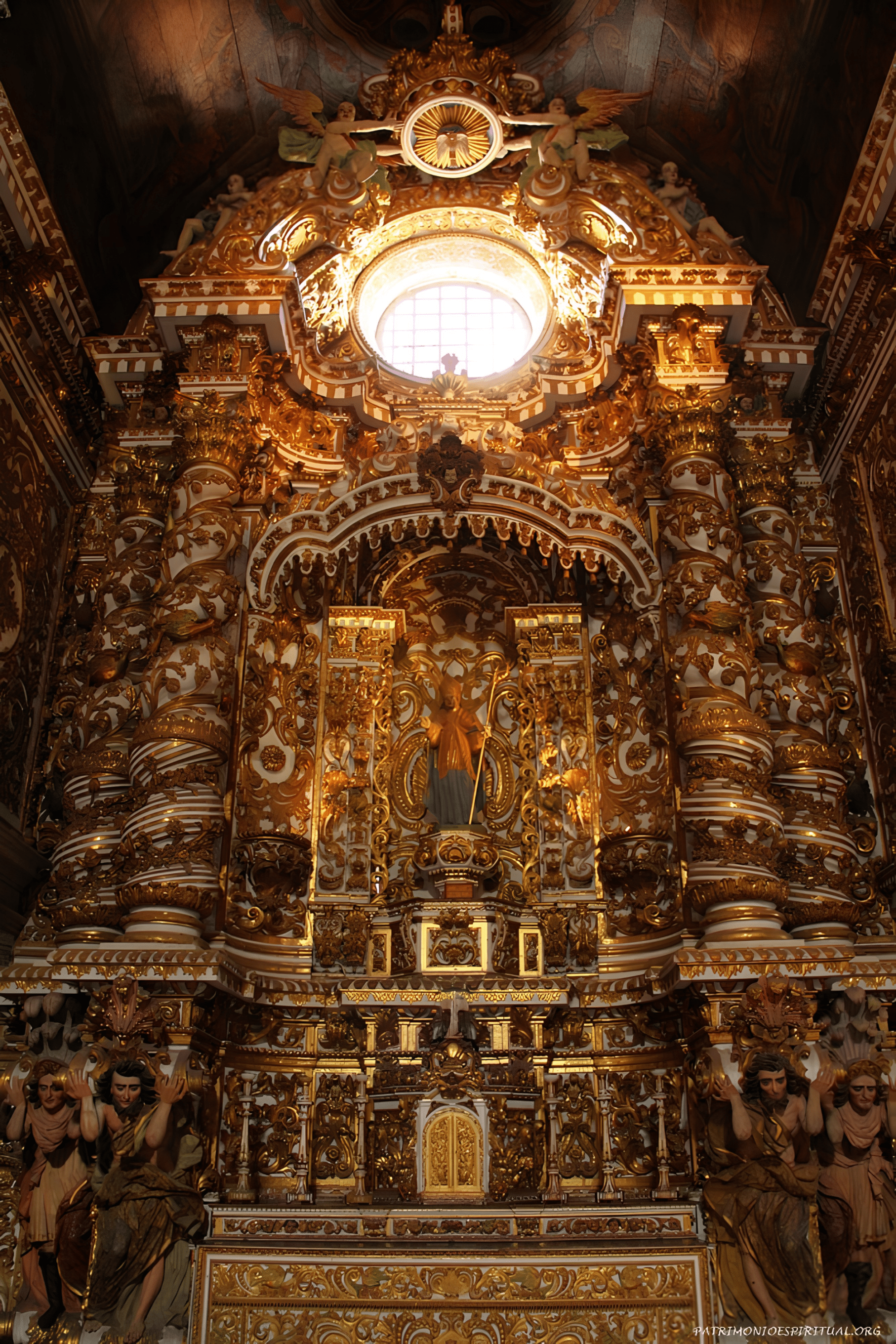
The floor of the chancel is made of marble in various colours, carved to depict foliage. The flooring was brought from Portugal in 1738. And the tiles on the walls, also from Portugal, depict scenes from the life of St Francis.
Iconography and symbolism
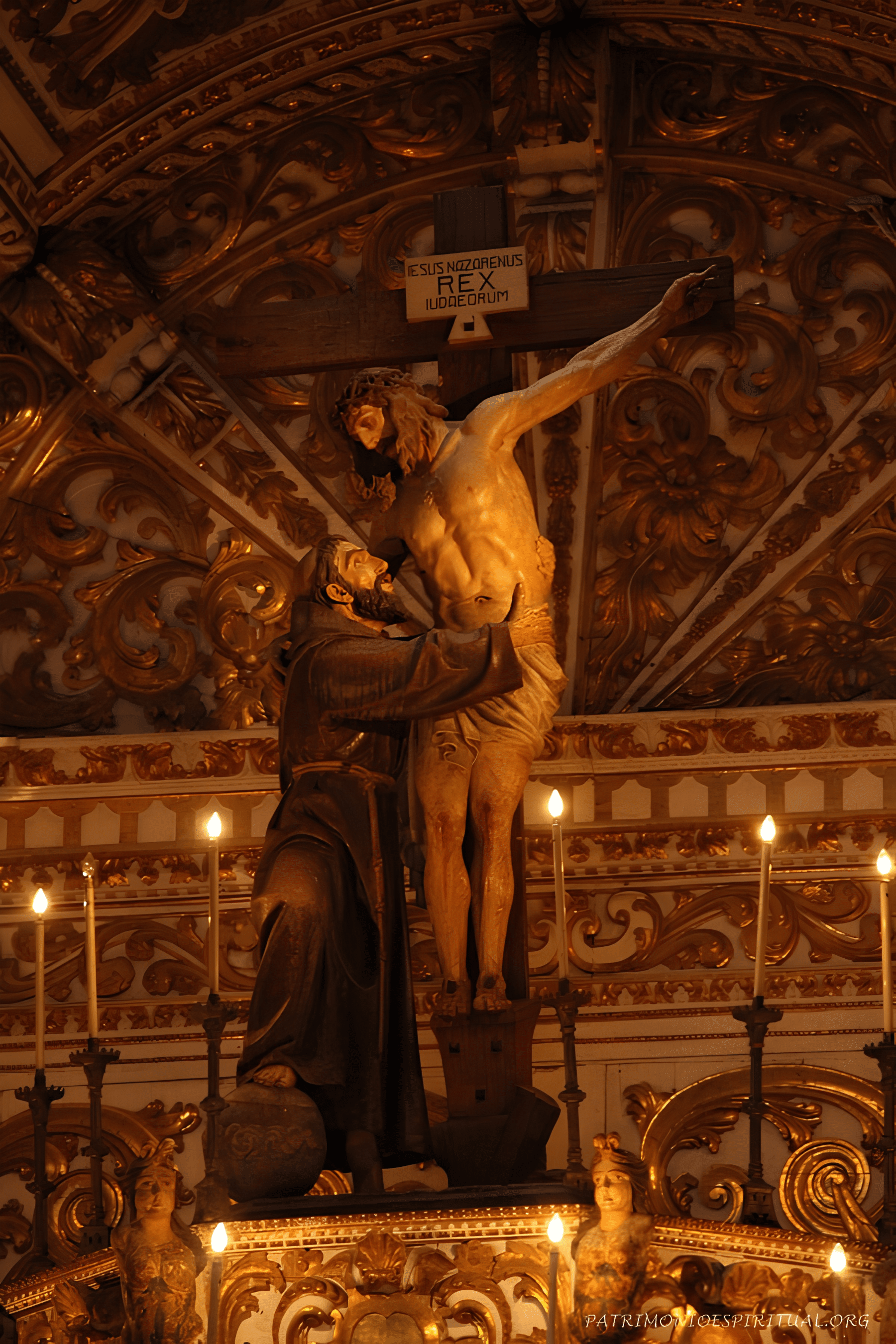
The crossing arch and the façade bear the Franciscan coat of arms alongside the arms of Portugal. The ceiling paintings depict scenes from the life of Christ, the Virgin Mary and figures from the Old Testament. The high altar places Saint Francis before the crucified Christ, contrasting austerity with Baroque splendour.
The Cloister and Moral Messages
The panels in the cloister feature illustrations from the *Teatro moral de la vida humana…* and classical emblems. The inscriptions bear messages such as ‘Rich is he who covets nothing’ and ‘Death awaits us all equally’, inviting reflection on virtue, death and balance.
Use and contrast of spaces
The worship areas are richly decorated, whilst the convent rooms — refectories, halls and cells — retain their simplicity and rustic character, in keeping with the Franciscan vow of poverty.
Importance and conservation
The Church and Convent of São Francisco in Salvador are prime examples of Portuguese Baroque architecture in the New World. Their heritage — tiles, woodcarvings, paintings and marble — requires ongoing conservation and periodic restoration.
Tour
Situated in the historic centre of Salvador, the Church and Convent of São Francisco is a must-see for anyone interested in religious art, Baroque architecture and the religious history of Bahia.

Publicações Relacionadas
Bay of Todos os Santos: nature, history and cultur
Tourist attractions for children in Salvador: Fun and learning
Juazeiro: Discover the Land of the Carrancas
Enchanted fountain in Chapada Diamantina: How to get there
Torrinha Cave: A Speleological Marvel in Brazil
Church and Convent of Santa Clara do Desterro and its History in Salvador
10 Interesting Facts About Rio de Contas That You Didn’t Know
Alameda do Sol — Vila da Praia do Forte (BA) | Things to do
Chapada Diamantina's architectural style and influences
Madre de Deus Island (BA) — Beaches, Islands and Tourism in the Recôncavo
Discover the reasons for a holiday in Salvador, Bahia
Towns and the Abrolhos Archipelago — The southernmost tip of Bahia
Pelourinho: what to do in Salvador’s Historic Centre
History and Historical Attractions of Itacaré Reveale
Lapão Cave: The Ultimate Adventure Experience
Dive Sites of Chapada Diamantina: A Guide
Palaces in Salvador to visit and learn about Brazil's history
Mucuri and Costa Dourada — Beaches, cliffs and ecotourism in Bahia
Coast of Discovery: Bahia's Historical Treasures
Discover the 23 beaches of Salvador — A complete guide and tips
Find out how to celebrate Carnival in Salvador, Bahia
Baixio: Between lagoons, dunes and the charm of a village surrounded by nature
Garcez Beach: Discover Paradise in Jaguaripe
39 Museums in Salvador: Discover the history and culture of Bahia
Convent and Church of Santa Teresa and the UFBA Museum of Sacred Art in Salvador
Church of Nossa Senhora dos Mares (Salvador) — History and Architecture
Mucugê: Discover the local history and culture
Discover the Magnificence Fort of Nossa Senhora de Monte Serrat
Skydiving, Paragliding and Ballooning in Bahia
Ilhéus: A Journey Through Bahia's Rich History
Main islands of Todos os Santos Bay | Visitor’s Guide
Things to do in Lençóis in the Chapada Diamantina — 15 attractions
Best Beaches in Bahia: Your Guide to Paradise
What to do on Boipeba Island - Tourist Guide - videos
Things to Do in Nova Viçosa (Bahia): Beaches, Islands and Abrolhos
Tourist Attractions on the Rio de Contas in Itacaré, Bahia
This post is also on:
 Português
  English
  Deutsch
  Español
  Français