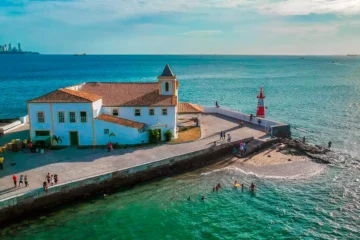
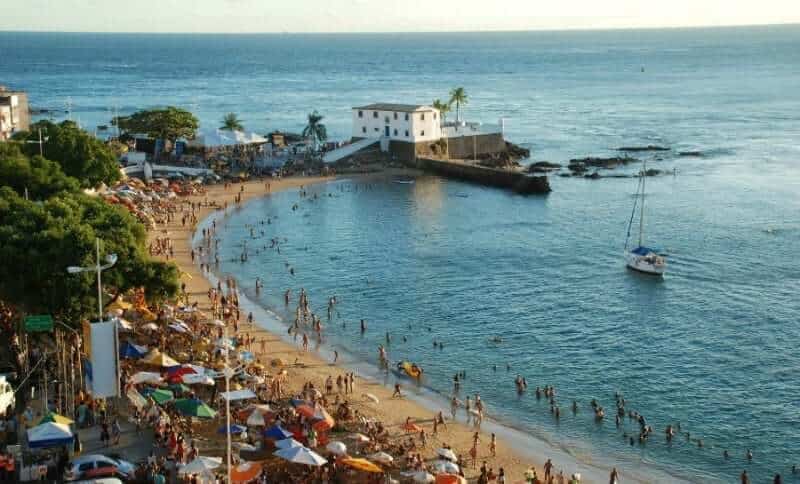
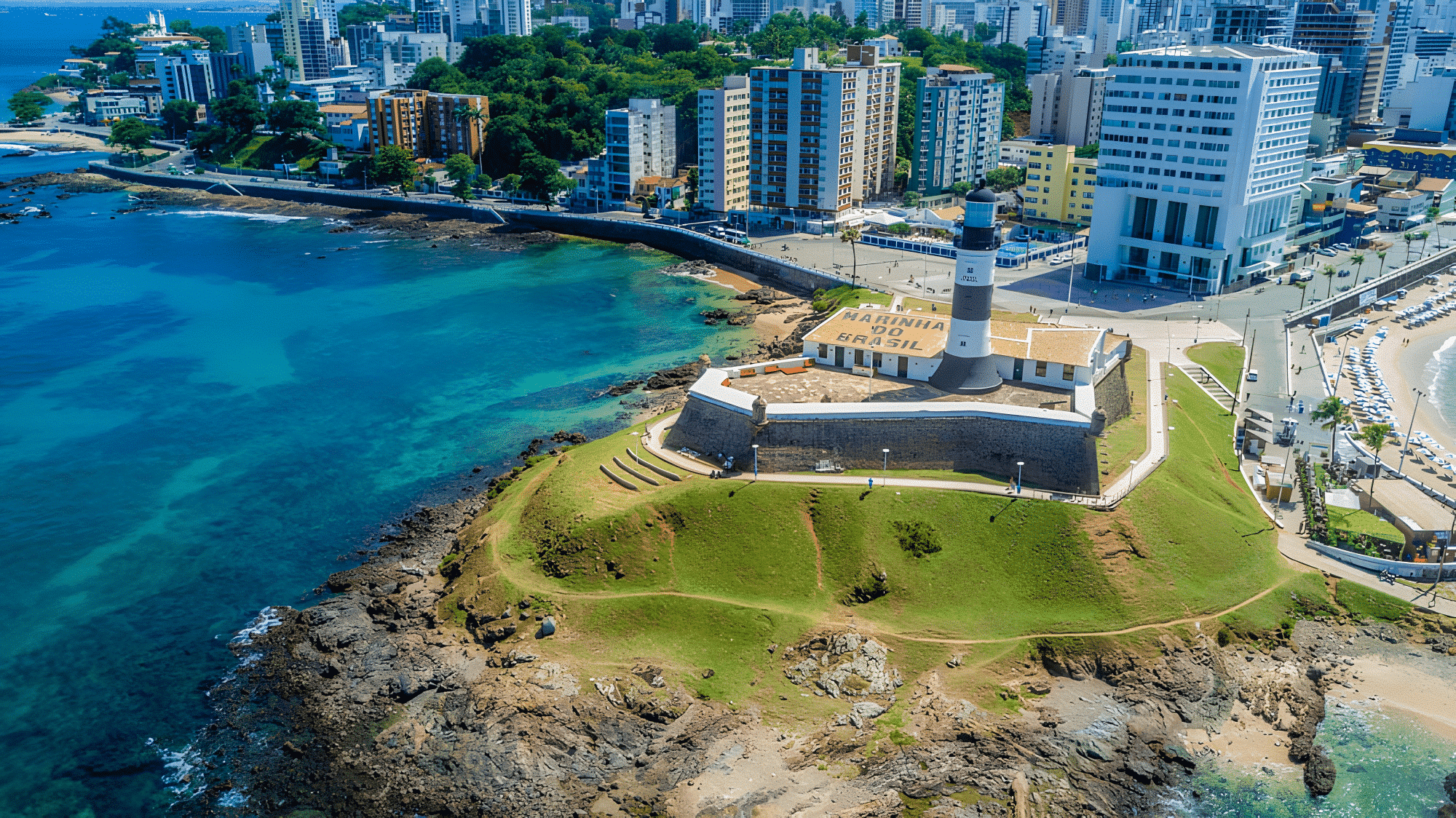
Although commonly known as the ‘Barra Lighthouse’, the site is actually the Fort of Santo Antônio da Barra — an older fortification (16th–17th centuries) which houses the Barra Lighthouse, built in the late 17th century, and the Bahia Maritime Museum.


Historical overview
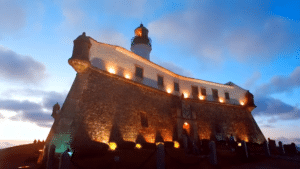
História do Forte de Santo Antônio da Barra em Salvador25:49
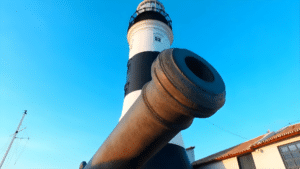
Forte de Santo Antônio da Barra — história, Farol da Barra e Museu Náutico15:09
- Origin: the first earth and timber structures dating from the 16th century (c. 1534).
- Restoration: reconstruction in masonry between 1583 and 1587; extensions in subsequent centuries.
- Lighthouse: a historic structure associated with navigation (late 17th century) — Barra Lighthouse.
- Today: it houses the Bahia Maritime Museum and is a tourist attraction offering panoramic views of the Bay of Todos os Santos.
Origins and development
The Fort of Santo Antônio da Barra was built as a defensive structure at Ponta do Padrão to protect the entrance to the Bay of Todos os Santos. Originally constructed from lightweight materials, it was converted into a stone fortification towards the end of the 16th century, taking on a polygonal layout adapted to the terrain.


Military role and conflicts
Throughout the colonial period, the Fort of Santo Antônio da Barra formed part of Salvador’s defence network and played a role in events such as the Dutch invasion of 1624. Despite historical criticism of its tactical effectiveness during certain periods, its role in monitoring the harbour entrance and signalling to ships remained consistently important.
Navigation and signposting
The Barra Lighthouse, which has stood next to the Fort of Santo Antônio da Barra since the late 17th century, has become a historic landmark for navigation in the region. Over the centuries, the lighting equipment has been modernised, culminating in its electrification in the 20th century.
Restoration and cultural use
In the 19th and 20th centuries, the Fort of Santo Antônio da Barra underwent renovations and restoration work that preserved its structure. Today it houses the Bahia Maritime Museum, with collections on maritime archaeology, navigational instruments, cartography and accounts of shipwrecks.

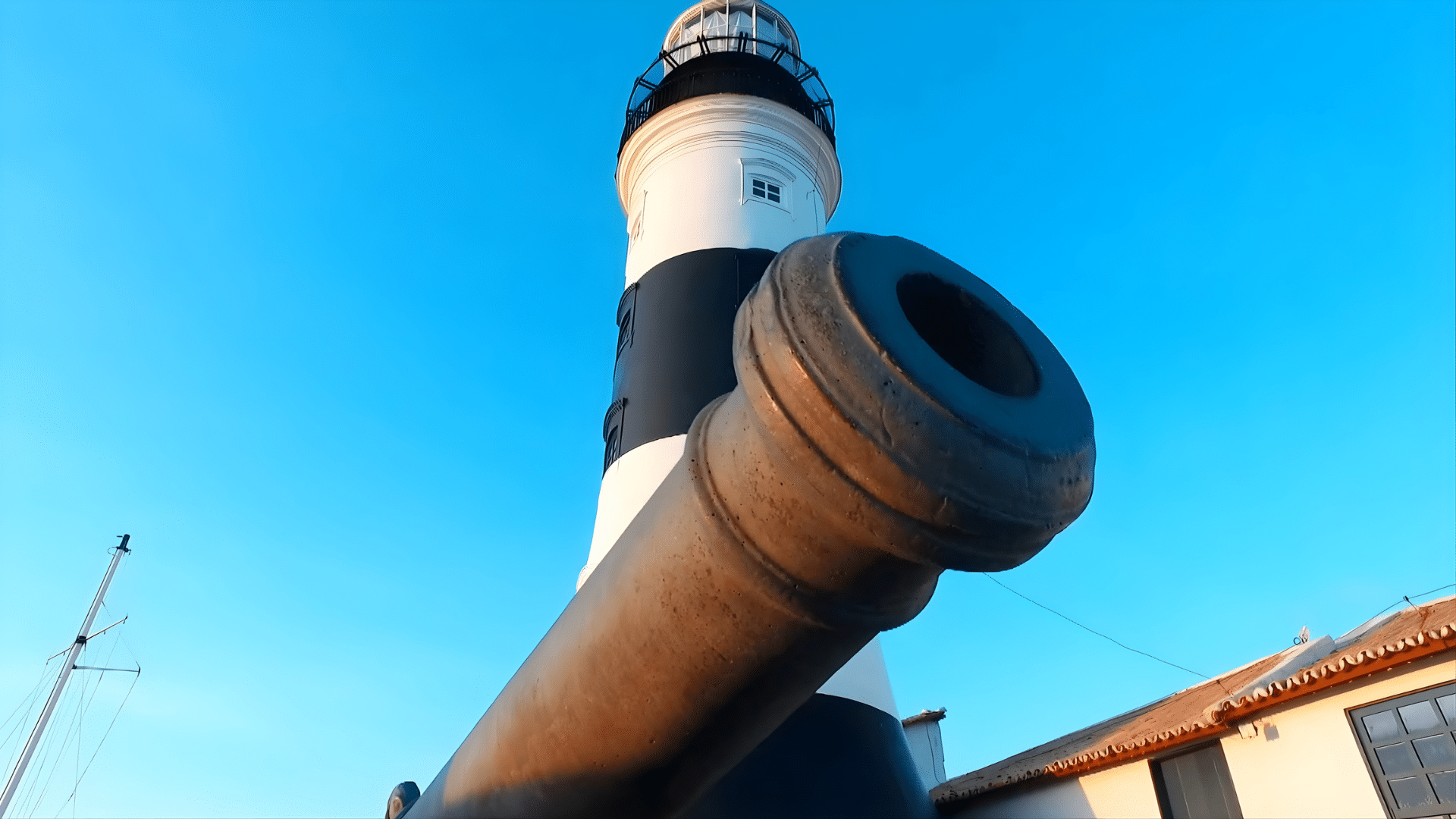
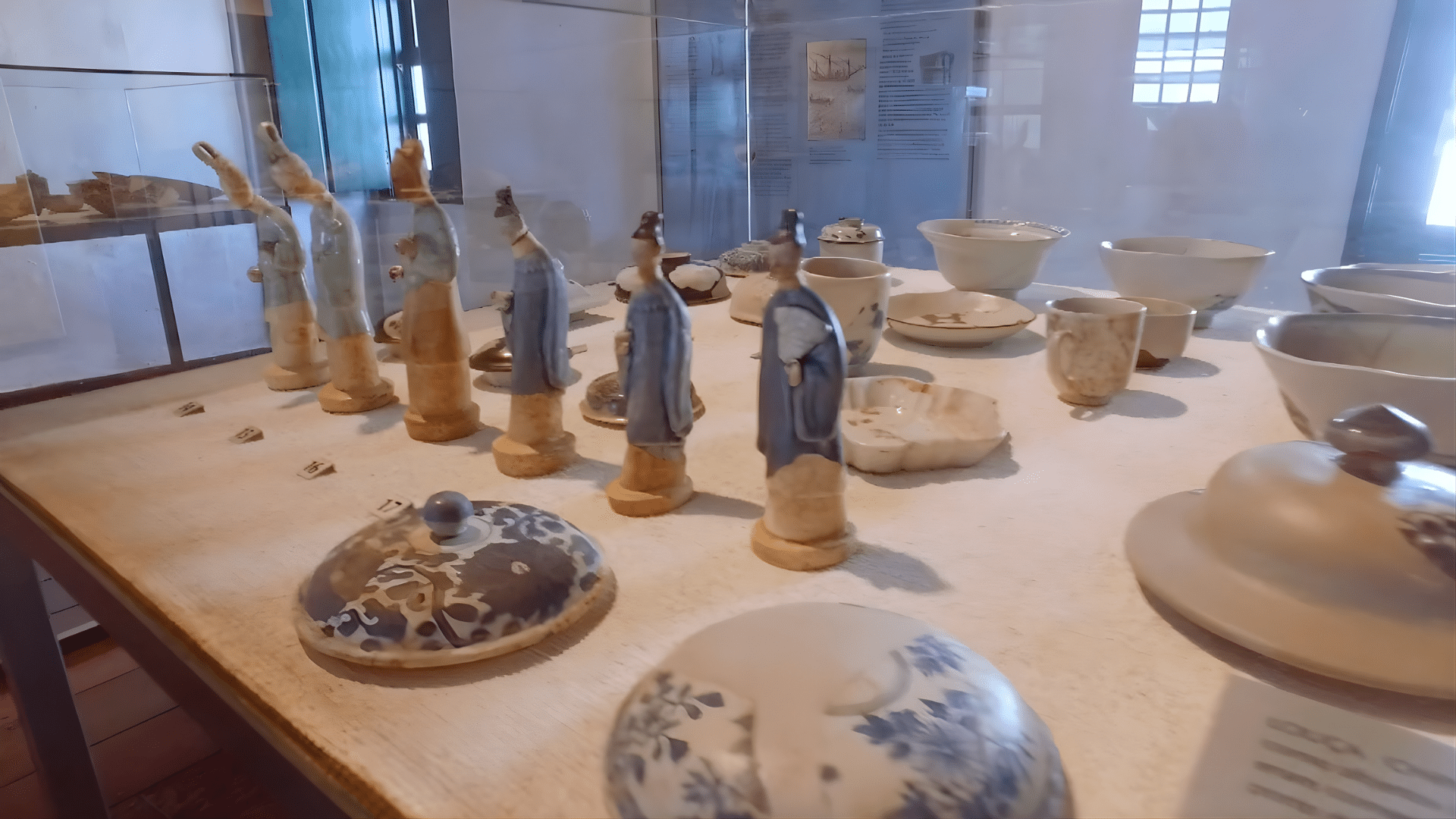
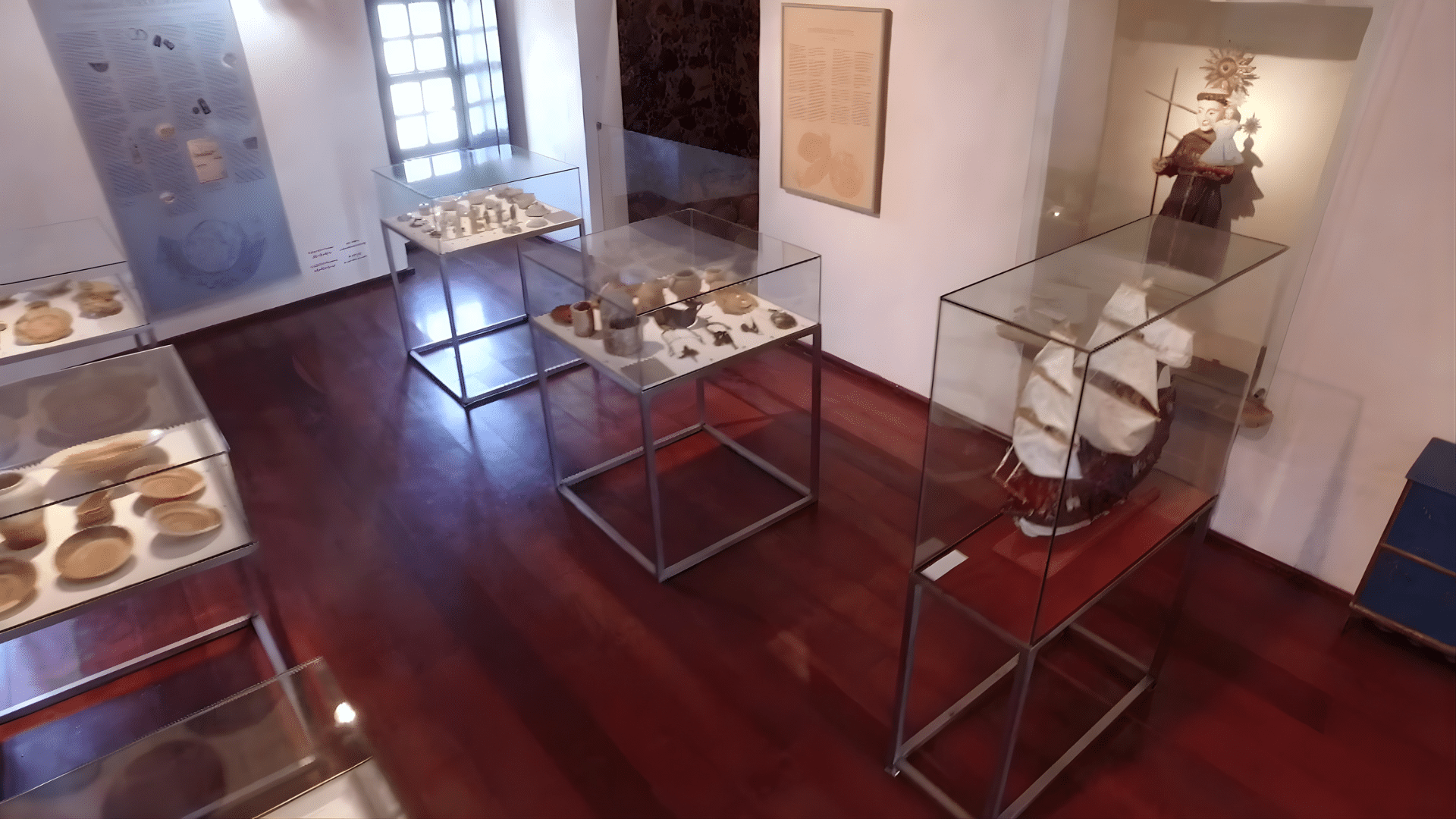
What to see at the Nautical Museum
- Underwater archaeological collections and finds from shipwrecks.
- Historical navigational instruments and replicas of navigational equipment.
- Information panels on the history of Santo Antônio da Barra Fort and navigation in the Bay of Todos os Santos.
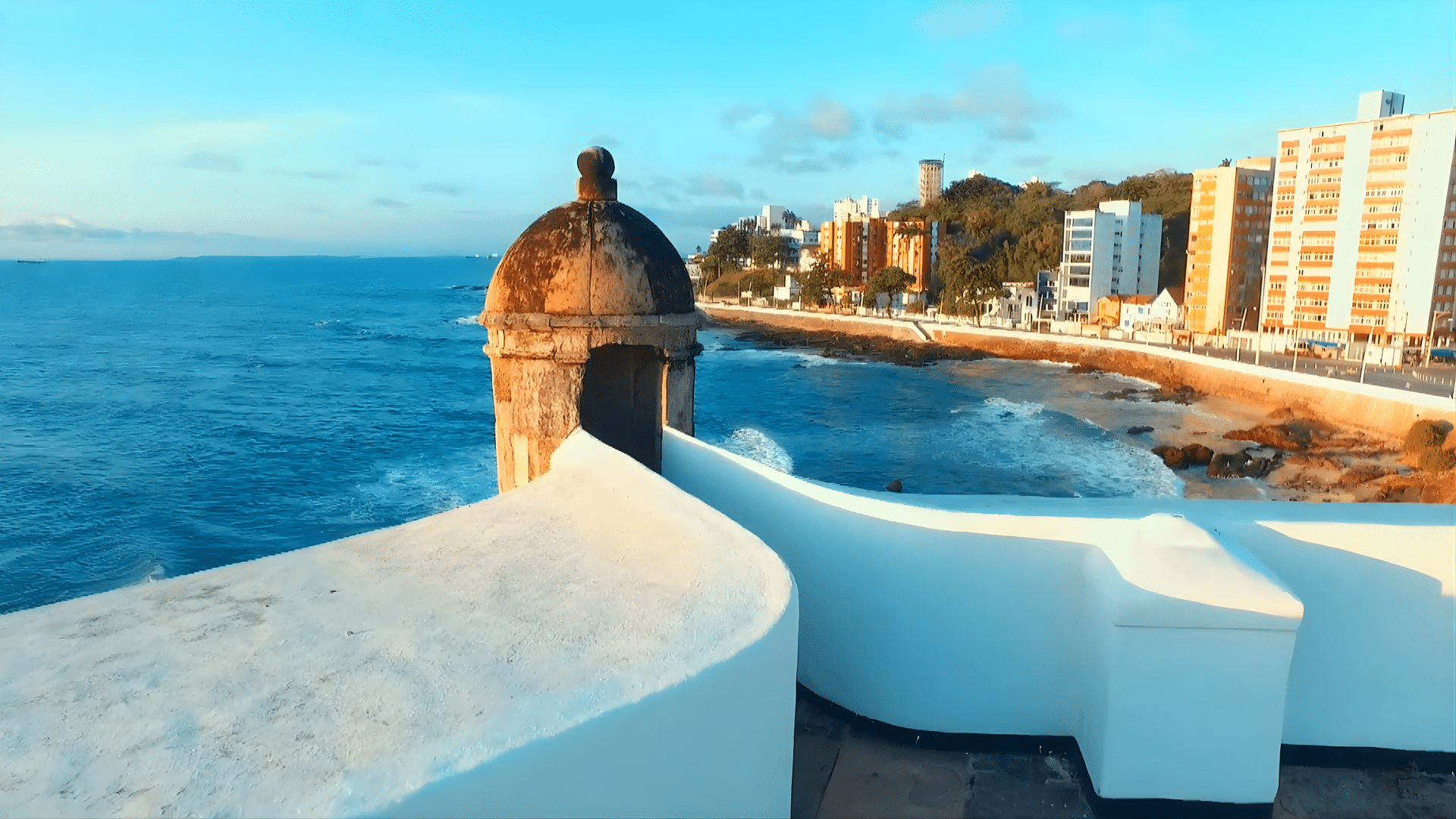
- View of the lighthouse and panoramic view of the coast, ideal for taking photos and watching the sunset.
Practical tips for your visit
- Opening hours: please check the Bahia Maritime Museum’s website before you go (opening hours may vary on public holidays).
- Tickets: check the latest prices at the box office or on the official website.
- Access: located in Largo do Farol da Barra — easily accessible by public transport and car.
- Recommendations: take your camera to the lighthouse viewing point, respect the indoor areas and follow the site’s guidelines.
See also The defences of Porto da Barra – the Forts of Santa Maria and São Diogo and The wreck of the galleon Sacramento in Salvador, Bahia
Publicações Relacionadas
Bahia Art Museum (MAB): Learn about its history and collection
Where to Stay in Salvador for Your Best Experience
Tourist attractions for children in Salvador: fun and learning
Bahia Maritime Museum: History of Navigation at the Barra Lighthouse
Pelourinho: what to do in Salvador’s Historic Centre
Tourist attractions in the Gamboa neighbourhood in Salvador BA
4 Must-See Museums in Salvador: Art, History and Culture
Fort of Nossa Senhora de Monte Serrat History
Interesting places to visit in Salvador
The most visited churches in Salvador — itinerary and tips
History of the Cathedral Basilica of Salvador
History and sights of Avenida Contorno in Salvador BA
39 Museums in Salvador: Discover the history and culture of Bahia
Secret History of Salvador, Bahia - History of Brazil
Tourist Attractions and Architectural Heritage of Salvador, Bahia
Church of Nossa Senhora dos Mares (Salvador) — History and Architecture
Features and History of the Church and Convent of São Francisco
Cathedral Basilica of Salvador — History, Sacred Art and Collection
Solar do Unhão & MAM-BA — History, Architecture and a Visit
Prostitution, sex, massage parlours and nightclubs in Salvador
History of the Church of São Pedro dos Clérigos in Salvador
Attractions in the Historic Centre of Salvador, Bahia
Church and Convent of Nossa Senhora da Palma in Salvador, Bahia
Ponta de Humaitá — Lighthouse, church and the best sunset in Salvador
Churches of Salvador: Architectural and Historical Treasures
Discover the Magnificence Fort of Nossa Senhora de Monte Serrat
Palaces in Salvador to visit and learn about Brazil's history
History of São Marcelo Fort — Salvador, Bahia
7-day itinerary in Salvador and the surrounding area: Pelourinho, the islands and Praia do Forte
History of the Senhor do Bonfim Ribbons — Origin, Meaning and Traditions
History of the forts and lighthouses of Salvador, Bahia
Basílica Santuário Nossa Senhora da Conceição da Praia — history and architecture
Pelourinho (Salvador) — Historical Guide, Architecture, and UNESCO World Heritage Site
Parks and Squares in Salvador for Leisure Activities
Lacerda Elevator — history, construction and visits
History of the Church of Nosso Senhor do Bonfim in Salvador
This post is also on:
 Português
  English
  Deutsch
  Español
  Français